🎾 Tennis Library
then at the court
- Put a cone or towel in the wide corner, one at the body position, one on the centre T of the deuce box.
- Serve 5 balls at each target in turn — same relaxed motion, just change your aim point.
- Count how many hit the zone out of 5. Write the score.
- Switch to the ad court and repeat all three targets.
💡 Wide on the deuce and T on the ad open the court the most — they pull the returner off the court.
- Treat every serve like a real point: you get a first and (if needed) a second.
- First serve: commit to a target and swing freely at about 80% — misses are fine.
- If the first misses, hit a second serve: slice, safe height over the net, aimed to land in.
- Do 20 pairs. Count first-serves in (aim for 6–7 of 10) and second-serves in (aim for 10 of 10).
⚠️ Never practise a first serve you wouldn't trust at 4–4 in a match. A reliable second serve wins more than a huge first.
then Pongbot
Pongbot
Pongbot
Pongbot
Pongbot
Pongbot
Pongbot
Pongbot
Pongbot
Pongbot
Drills
Drills
Drills
- Start a normal forehand rally from 4–5m.
- After every shot, shuffle 1–2 steps to the left.
- Immediately shuffle back to your center mark.
- Split step just before the ball hits the wall, then hit again.
- 10 shots, then switch to shuffling right after each shot.
💡 This mimics recovering after a wide forehand — the most common recovery in tennis.
- Place a cone or tape mark on the ground where you normally stand.
- Hit a forehand, then immediately shuffle back so one foot touches the marker.
- Split step, then hit again.
- If you miss the marker or can't get back in time, your swing is too big — shorten it.
- 15 shots forehand, 15 backhand.
⚠️ Common mistake: staying glued to the spot. Tennis players are always moving — never static between shots.
- Hit a forehand, then take 2 crossover steps to the right (right foot crosses in front of left).
- Stop, hop into a split step.
- Hit a backhand (or redirect to the forehand side).
- Take 2 crossover steps to the left.
- Repeat — alternate directions after each shot.
💡 Crossover recovery is faster than shuffling over 3+ steps. It's what pros use after a wide ball.
- Set 2 cones about 2 metres behind your hitting position.
- Hit a shot into the wall.
- Quickly run a figure-8 around the 2 cones — tight turns, stay low.
- Sprint back to your hitting position and split step just before the ball arrives.
- Hit again. 8 total shots. You'll have to move fast — start with slower shots off the wall.
⚠️ Hit softer into the wall so you have more time for the figure-8. As you get faster, hit harder.
- Start at 4–5m. Hit 3 normal groundstrokes (forehand or backhand).
- On the 4th ball, hit a flatter, deeper shot — your "approach shot" — and walk forward as you hit it.
- Move in to 2–3m. Hit 2 volleys.
- Let the last volley go, walk back to baseline distance, reset. That's 1 sequence.
- 8 sequences total. Focus on the transition — it should feel like moving through the court.
💡 The approach shot should be flatter than your groundstrokes. Topspin lobs the wall; flat drives it through.
- 3 groundstrokes from the back.
- Approach and move to volley range.
- Hit 1 volley — aim it into the upper part of the wall so it comes back high.
- Move back quickly as the ball goes up.
- Let it bounce, then smash it. That's the full sequence — one simulated point.
- 6 full points. Count how many you complete cleanly without a mistake.
💡 This is the hardest drill in the wall session. Don't try it until you're comfortable with each piece separately.
Drills
Drill
- Stand sideways to the net (imaginary). Ball hand and racket hand both rise together.
- Reach up to the trophy position — both arms form a Y shape, weight shifts to your back foot, knees bent.
- Hold for 2 seconds. You should feel loaded and balanced, not tipping over.
- Lower and reset. 10 reps.
⚠️ Common mistake: rushing through. Hold each trophy position — it's a checkpoint, not a blur.
- Go through the full service motion — toss (imaginary), trophy, uncoil, swing up.
- At the top of the swing, let your forearm rotate outward (pronate) — like turning a doorknob clockwise.
- Follow through naturally, ending with the racket down by your left hip.
- 10 full serves at match pace. These ingrain the motion between rallying sets.
💡 Pronation is the key to a flat serve with pace. If you don't pronate, you lose speed and risk shoulder strain.
- Start your normal forehand rally from 4–5m.
- Count every ball you keep in play.
- One miss and the count resets — you only get one attempt.
- After the attempt, write the number down (phone notes, whiteboard, anywhere).
- Every session, try to beat that number.
💡 The record-keeping is the key. Kids improve 2–3× faster when they're chasing a specific number they wrote down.
- Same rules as the FH record — one attempt, count until you miss.
- Backhand only from 4–5m.
- Write the number down after.
- Alternate forehand and backhand — one shot each wing.
- Count every ball in a row. Miss one and the count resets.
- Write the number.
- This is harder than either wing alone — a count of 20 is excellent.
- Move to 2–3m from the wall.
- Alternate forehand and backhand volleys.
- Count until you miss. One attempt only.
- Write it down. A count of 30+ is a good target.
💡 Post your records somewhere visible — on the wall, in your kit bag, or your phone lock screen. Seeing the number motivates you to beat it next session.
1 · Warm up (do first, every time)
- Lift your knees to about hip height with each step.
- Land softly on the balls of your feet — no stomping.
- Keep your arms swinging naturally at your sides.
- Stay relaxed — this is warm-up, not a sprint.
- High knees: drive each knee up to hip height as fast as you can, pumping your arms.
- Butt kicks: kick your heel up behind you to try to touch your butt, alternating legs fast.
- Stay on the balls of your feet for both.
- These wake up your hip muscles and quads — key for running wide balls.
- Stand beside a wall and hold it lightly with one hand.
- Forward/back: swing your outside leg forward and back like a pendulum, 10 times.
- Side to side: swing the same leg across your body and out to the side, 10 times.
- Switch sides. Keep the swing relaxed — momentum, not muscle.
💡 Tip: these open up your hips and hamstrings — critical for wide lunges in tennis.
- Arms out to the sides, make big circles forward for 10 reps.
- Reverse — big circles backward for 10 reps.
- Then roll your shoulders forward 10 times, then backward 10 times.
- These warm up your shoulder muscles — important before any swinging.
- Inchworm: stand tall → bend and put hands on floor → walk hands out to a plank → walk feet back to hands → stand up. That's one.
- Lunge with rotation: step forward with right foot into a lunge → twist your upper body to the right, arms out → twist back → return to standing.
- 5 inchworms, then 5 lunges each side.
- These are probably the best warm-up exercises for tennis — they open hips, hamstrings, and upper back all at once.
⚠️ Common mistake on the lunge: leaning forward. Keep your torso upright as you twist.
2 · Leg strength
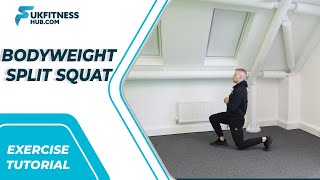
- Step your right foot forward, left foot back — like a lunge but you don't move your feet during the set.
- Lower your back knee slowly toward the floor — count 3 seconds down.
- Stop just before your knee touches the floor.
- Drive through your front heel and rise back up quickly.
- Do 6 reps, then switch legs.
⚠️ Common mistake: front knee caving inward. Push it out over your 2nd toe the whole way down.
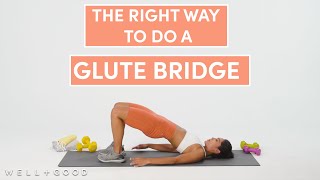
- Lie on your back, knees bent, feet flat on the floor hip-width apart.
- Press your feet into the floor and drive your hips up until your body is a straight line from knees to shoulders.
- Squeeze your glutes hard at the top and hold for 2 seconds.
- Lower slowly and repeat.
- Do 10 reps. Your glutes power every sprint and direction change in tennis.
💡 Tip: if this is too easy, try it with one leg at a time — single-leg glute bridge.
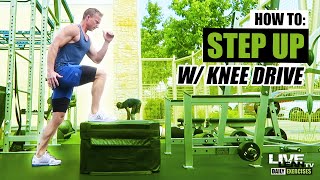
- Place your right foot flat on top of the 20" box, left foot stays on the floor.
- Push through your right heel and stand up onto the box.
- As you rise, drive your left knee up fast to hip height.
- Hold the top for one second — stay tall, don't lean forward.
- Step back down slowly. Do all reps on the right, then switch to left.
⚠️ Common mistake: leaning forward as you push up. Keep your chest up and back straight.
3 · Power
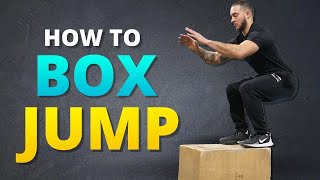
- Stand facing the 20" box, feet shoulder-width apart, toes pointing forward.
- Bend your knees and swing your arms back — this loads the jump.
- Explode up, swing your arms forward, land on top with both feet at the same time.
- Land soft — knees bent, no loud thump. Soft landings protect your knees and joints.
- Step (don't jump) back down. Reset and go again.
⚠️ Common mistake: landing with straight legs. Always land with bent knees to absorb the impact.
- Stand on your right foot, knee slightly bent.
- Push off sideways to the left — like a speed skater pushing off the ice.
- Land on your left foot only, knee bent, and hold for 1 full second without touching the other foot down.
- Then push back to the right. That's 2 jumps (1 each side).
- 3 sets of 10 total jumps. Rest 45 seconds between sets.
⚠️ This is the most tennis-specific exercise in the whole plan. Every time you lunge wide for a ball you're doing this exact movement. Land soft — knees bent, no loud thump.
4 · Finish — fast shadow swings
- Start in ready position — feet shoulder-width apart, knees slightly bent.
- Rotate your shoulders to the right (unit turn) — this is your backswing.
- Drive forward fast — swing through the hitting zone and finish hands high over your left shoulder.
- Snap back to ready position immediately after each swing.
- All 20 reps with full effort — fast and powerful, no breaks.
⚠️ Common mistake: only swinging your arm. Power comes from rotating your whole upper body, not just the arm.
- Ready position — both hands on your imaginary grip.
- Rotate your shoulders to the LEFT — right shoulder points toward the net.
- Drive both hands forward and through the hitting zone.
- Finish high — both hands end up over your right shoulder.
- Reset to ready position immediately and repeat.
⚠️ Common mistake: only using one hand. Both hands should drive the swing together on a two-handed backhand.
5 · Quick stretch
- Stand facing a wall, hands on it for support.
- Step your right foot back about 60cm, keeping it flat on the floor.
- Lean your hips toward the wall until you feel a stretch in your right calf.
- Hold 30 seconds, then switch legs.
💡 Tight calves are one of the top causes of ankle rolls in young tennis players.
- Step your right foot forward into a low lunge. Back knee rests on the floor.
- Keep your chest tall — don't lean forward.
- Push your hips forward slightly until you feel a stretch at the front of your left hip.
- Hold 30 seconds, then switch sides.
💡 Hip muscles tighten during sprint and plyo work. Stretching them keeps your stride long and free.
1 · Warm up
- Lift your knees to about hip height with each step.
- Land softly on the balls of your feet — no stomping.
- Keep your arms swinging naturally at your sides.
- Stay relaxed — this is warm-up, not a sprint.
- High knees: drive each knee up to hip height as fast as you can, pumping your arms.
- Butt kicks: kick your heel up behind you to try to touch your butt, alternating legs fast.
- Stay on the balls of your feet for both.
- These wake up your hip muscles and quads — key for running wide balls.
- Stand beside a wall and hold it lightly with one hand.
- Forward/back: swing your outside leg forward and back like a pendulum, 10 times.
- Side to side: swing the same leg across your body and out to the side, 10 times.
- Switch sides. Keep the swing relaxed — momentum, not muscle.
💡 Tip: these open up your hips and hamstrings — critical for wide lunges in tennis.
- Arms out to the sides, make big circles forward for 10 reps.
- Reverse — big circles backward for 10 reps.
- Then roll your shoulders forward 10 times, then backward 10 times.
- These warm up your shoulder muscles — important before any swinging.
- Inchworm: stand tall → bend and put hands on floor → walk hands out to a plank → walk feet back to hands → stand up. That's one.
- Lunge with rotation: step forward with right foot into a lunge → twist your upper body to the right, arms out → twist back → return to standing.
- 5 inchworms, then 5 lunges each side.
- These are probably the best warm-up exercises for tennis — they open hips, hamstrings, and upper back all at once.
⚠️ Common mistake on the lunge: leaning forward. Keep your torso upright as you twist.
2 · Hands & eyes (fun)
- Stand about 1 metre from a flat wall, ball in your right hand.
- Throw it underhand against the wall with medium force.
- Watch the ball the whole way — track it like a real tennis shot coming at you.
- Catch it with your right hand as it comes back.
- Count 30 seconds. How many can you catch without dropping? Try to beat it next time.
⚠️ Common mistake: throwing too hard. Medium pace is easier to track and builds better focus.
- Hold one tennis ball in both hands at shoulder height in front of you.
- Drop the ball — just open your hands and let it fall straight down.
- The moment the ball leaves your hands, clap once.
- Then catch the ball with both hands before it bounces a second time.
- Once you can do 10 in a row, try to clap twice before catching.
💡 Tip: start with the ball lower (waist height) if shoulder height is too fast. The lower the drop, the harder it is.
- Hold one ball in each hand, arms at your sides.
- Toss your RIGHT ball up about 40cm.
- Half a second later, toss your LEFT ball up.
- Catch right, then catch left. Keep going without stopping.
- Count consecutive catches without dropping. Target: 10 in a row.
⚠️ Common mistake: tossing both balls at the same time. Right goes FIRST — left follows half a second later.
3 · Core
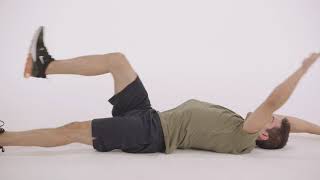
- Lie on your back. Arms pointed straight up at the ceiling. Knees bent 90°, lifted off the floor (like you're sitting in a chair upside down).
- Press your lower back firmly into the floor — keep it there the whole time.
- Slowly lower your right arm behind your head AND your left leg toward the floor at the same time.
- Stop before your back arches. Bring them back up. Switch sides.
- 5 reps per side = 1 set. Go very slow — this is harder than it looks.
⚠️ Common mistake: letting your lower back lift off the floor. If that happens, you've gone too far — shorten the range of motion.
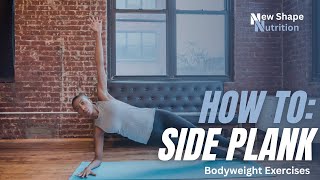
- Lie on your right side. Prop yourself up on your right forearm — elbow under your shoulder.
- Stack your feet or put one in front of the other for more stability.
- Lift your hips so your body is a straight line from head to feet.
- Hold for 20 seconds. Don't let your hips sag.
- Switch to the left side. That's 1 set.
💡 Tip: side plank trains the core muscles that keep your body stable when you swing — really important for power.
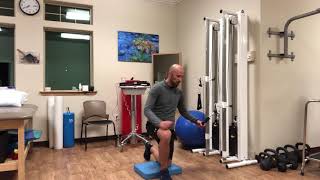
- Kneel on your right knee, left foot forward — like a lunge but your back knee stays on the floor.
- Put both hands together at chest height, arms straight out in front of you.
- Rotate your upper body to the LEFT as far as you can — lead with your eyes and shoulders.
- Hold for 1 second at the end, then rotate back to the front.
- 8 reps rotating left, then switch legs (right foot forward) and do 8 reps rotating right.
💡 The kneeling position locks your hips in place so all the rotation comes from your upper body — exactly the separation you need for a powerful forehand.
4 · Shoulder health (light band)
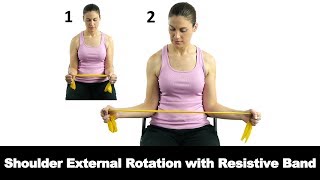
- Hold a resistance band in your right hand. Anchor the other end to a door handle or hold it with your left hand.
- Elbow bent 90°, tucked against your side — keep it there the whole time.
- Rotate your forearm outward (away from your body) as far as you can.
- Return slowly. That's one rep.
- 10 reps per arm. This is the #1 shoulder-protection exercise for tennis players.
💡 Tip: use a light band. This is not about strength — it's about protecting the shoulder muscles. Light = right.
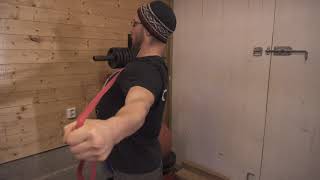
- Hold a resistance band in both hands, arms straight out in front of you at shoulder height.
- Pull the band apart by spreading your arms wide, squeezing your shoulder blades together at the end.
- Return slowly to start. That's one rep.
- 15 reps per set, 2 sets.
- These train the muscles that keep your shoulder stable during every serve and overhead.
💡 Tip: keep your arms straight the whole time — don't bend your elbows.
5 · Cool down
- Sit cross-legged on the floor, back straight.
- Place your right hand on your left knee and your left hand on the floor behind you.
- Rotate your upper body to the left and look behind you. Hold 2 seconds.
- Come back to centre, switch sides.
- 10 rotations per side.
💡 This is the exact rotation your upper back makes on every serve and forehand. Keeping it mobile means more power and less shoulder strain.
- Lie on your back, knees bent, feet flat.
- Cross your right ankle over your left knee (making a figure-4 shape).
- Pull your left thigh toward your chest — you'll feel a stretch in your right glute.
- Hold 30 seconds, switch sides.
💡 Strong, flexible glutes help you push off in any direction without back pain.
1 · Warm up
- Lift your knees to about hip height with each step.
- Land softly on the balls of your feet — no stomping.
- Keep your arms swinging naturally at your sides.
- Stay relaxed — this is warm-up, not a sprint.
- High knees: drive each knee up to hip height as fast as you can, pumping your arms.
- Butt kicks: kick your heel up behind you to try to touch your butt, alternating legs fast.
- Stay on the balls of your feet for both.
- These wake up your hip muscles and quads — key for running wide balls.
- Stand beside a wall and hold it lightly with one hand.
- Forward/back: swing your outside leg forward and back like a pendulum, 10 times.
- Side to side: swing the same leg across your body and out to the side, 10 times.
- Switch sides. Keep the swing relaxed — momentum, not muscle.
💡 Tip: these open up your hips and hamstrings — critical for wide lunges in tennis.
- Arms out to the sides, make big circles forward for 10 reps.
- Reverse — big circles backward for 10 reps.
- Then roll your shoulders forward 10 times, then backward 10 times.
- These warm up your shoulder muscles — important before any swinging.
- Inchworm: stand tall → bend and put hands on floor → walk hands out to a plank → walk feet back to hands → stand up. That's one.
- Lunge with rotation: step forward with right foot into a lunge → twist your upper body to the right, arms out → twist back → return to standing.
- 5 inchworms, then 5 lunges each side.
- These are probably the best warm-up exercises for tennis — they open hips, hamstrings, and upper back all at once.
⚠️ Common mistake on the lunge: leaning forward. Keep your torso upright as you twist.
2 · Ladder — quick feet
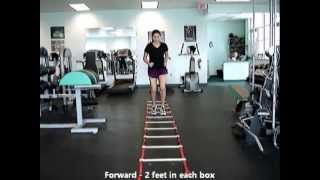
- Stand at the start of the ladder, feet hip-width apart.
- Step your right foot into square one, then bring your left foot in beside it.
- Step your right foot out the top, left foot follows.
- Move to the next square and repeat all the way down.
- Stay on the balls of your feet — don't flat-foot or stomp.
⚠️ Common mistake: looking down at your feet. Eyes forward — your feet will learn the pattern on their own.
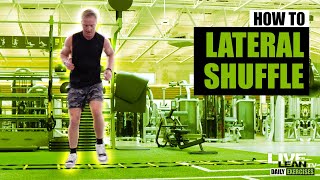
- Stand beside the ladder facing sideways, left shoulder toward the far end.
- Step your left foot into the first square, bring your right foot in beside it.
- Step left out the other side, right follows — you've cleared one square.
- Keep shuffling sideways to the end, then come back the other way.
- Hips stay low throughout — don't pop up between squares.
⚠️ Common mistake: crossing your feet. It's a shuffle only — feet never cross in front of each other.

- Stand beside the ladder facing sideways.
- Step your near foot IN to the square, then far foot IN — both feet inside.
- Step near foot OUT (past the ladder), then far foot OUT — both feet outside.
- Shift one square forward and repeat.
- Walk it first to learn the pattern, then build up speed.
⚠️ Common mistake: rushing before you know the rhythm. Slow walk-through first, speed comes later.
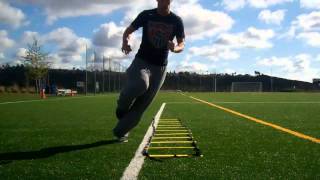
- Stand beside the ladder facing sideways.
- Step your near foot into the first square.
- Cross your far foot in front of your body into the same square.
- Step near foot out the other side, far foot follows normally.
- Keep shoulders facing forward — only your legs do the crossing.
⚠️ Common mistake: rotating your hips with the cross. Shoulders stay square; only the feet move.
3 · Cones — change direction
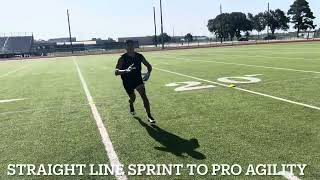
- Set up 4 cones: one at the start (A), one 9 metres ahead (B), one 4.5 metres left of B (C), one 4.5 metres right of B (D). They form a T shape.
- Sprint from A to B.
- Shuffle left to C — touch the cone with your left hand.
- Shuffle all the way right to D — touch with your right hand.
- Shuffle back to B, then backpedal to A.
- Go as fast as you can. Aim for under 12 seconds.
⚠️ Always shuffle — never cross your feet. The T-drill is used to test agility at every level of tennis.
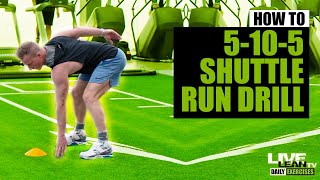
- Place 3 cones in a straight line, 5 metres apart (A — B — C). Start at the middle cone B.
- Sprint 5 metres to cone C. Touch it.
- Sprint 10 metres all the way to cone A. Touch it.
- Sprint 5 metres back to cone B (the middle).
- That's 1 run. Do 4 total, alternating which direction you start.
💡 This trains deceleration and direction change — exactly what happens when you chase a drop shot then recover for the passing shot.
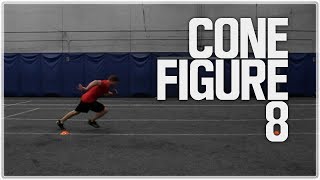
- Place 2 cones 3 metres apart.
- Run around the first cone, weave to the second, run around it, weave back — you're drawing a figure 8 on the ground.
- Stay low with bent knees. The goal is tight, fast turns.
- Do 6 full loops, rest, then do 6 more going the other direction first.
💡 Focus on the turns — plant hard on the outside foot and push off to change direction. This is what you do running around a short ball.
4 · Finish — link feet to swing
- Stand at your imaginary centre baseline position.
- Hop into a split step — land wide, knees bent, weight on the balls of your feet.
- The instant you land, push off hard sideways and sprint 3 steps.
- Plant your outside foot and swing a full shadow forehand or backhand.
- Jog back to centre. Alternate right (forehand) and left (backhand) each rep.
💡 Tip: the sprint should be all-out explosive — imagine the ball was just hit to the corner and you have 1 second to get there.
1 · Warm up
- Lift your knees to about hip height with each step.
- Land softly on the balls of your feet — no stomping.
- Keep your arms swinging naturally at your sides.
- Stay relaxed — this is warm-up, not a sprint.
- High knees: drive each knee up to hip height as fast as you can, pumping your arms.
- Butt kicks: kick your heel up behind you to try to touch your butt, alternating legs fast.
- Stay on the balls of your feet for both.
- These wake up your hip muscles and quads — key for running wide balls.
- Stand beside a wall and hold it lightly with one hand.
- Forward/back: swing your outside leg forward and back like a pendulum, 10 times.
- Side to side: swing the same leg across your body and out to the side, 10 times.
- Switch sides. Keep the swing relaxed — momentum, not muscle.
💡 Tip: these open up your hips and hamstrings — critical for wide lunges in tennis.
- Arms out to the sides, make big circles forward for 10 reps.
- Reverse — big circles backward for 10 reps.
- Then roll your shoulders forward 10 times, then backward 10 times.
- These warm up your shoulder muscles — important before any swinging.
- Inchworm: stand tall → bend and put hands on floor → walk hands out to a plank → walk feet back to hands → stand up. That's one.
- Lunge with rotation: step forward with right foot into a lunge → twist your upper body to the right, arms out → twist back → return to standing.
- 5 inchworms, then 5 lunges each side.
- These are probably the best warm-up exercises for tennis — they open hips, hamstrings, and upper back all at once.
⚠️ Common mistake on the lunge: leaning forward. Keep your torso upright as you twist.
2 · Circuit — 2 rounds

- Hands slightly wider than shoulders, fingers pointing forward.
- Lower your chest to the floor — whole body moves as one unit.
- Push back up to full arm extension.
- If you can't do 8 with good form, do them from your knees — that's fine.
- 3 sets of 8 with a 45-second rest between sets.
⚠️ Common mistake: hips sagging or shooting up. Keep your whole body as one straight line.
- Step your right foot forward, left foot back — like a lunge but you don't move your feet during the set.
- Lower your back knee slowly toward the floor — count 3 seconds down.
- Stop just before your knee touches the floor.
- Drive through your front heel and rise back up quickly.
- Do 6 reps, then switch legs.
⚠️ Common mistake: front knee caving inward. Push it out over your 2nd toe the whole way down.
- Lie on your back, knees bent, feet flat on the floor hip-width apart.
- Press your feet into the floor and drive your hips up until your body is a straight line from knees to shoulders.
- Squeeze your glutes hard at the top and hold for 2 seconds.
- Lower slowly and repeat.
- Do 10 reps. Your glutes power every sprint and direction change in tennis.
💡 Tip: if this is too easy, try it with one leg at a time — single-leg glute bridge.
- Hold a resistance band in both hands, arms straight out in front of you at shoulder height.
- Pull the band apart by spreading your arms wide, squeezing your shoulder blades together at the end.
- Return slowly to start. That's one rep.
- 15 reps per set, 2 sets.
- These train the muscles that keep your shoulder stable during every serve and overhead.
💡 Tip: keep your arms straight the whole time — don't bend your elbows.
- Kneel on your right knee, left foot forward — like a lunge but your back knee stays on the floor.
- Put both hands together at chest height, arms straight out in front of you.
- Rotate your upper body to the LEFT as far as you can — lead with your eyes and shoulders.
- Hold for 1 second at the end, then rotate back to the front.
- 8 reps rotating left, then switch legs (right foot forward) and do 8 reps rotating right.
💡 The kneeling position locks your hips in place so all the rotation comes from your upper body — exactly the separation you need for a powerful forehand.
- Lie on your back. Arms pointed straight up at the ceiling. Knees bent 90°, lifted off the floor (like you're sitting in a chair upside down).
- Press your lower back firmly into the floor — keep it there the whole time.
- Slowly lower your right arm behind your head AND your left leg toward the floor at the same time.
- Stop before your back arches. Bring them back up. Switch sides.
- 5 reps per side = 1 set. Go very slow — this is harder than it looks.
⚠️ Common mistake: letting your lower back lift off the floor. If that happens, you've gone too far — shorten the range of motion.
3 · Cool down
- Sit on the floor. Extend your right leg straight, bend your left knee with foot tucked in.
- Sit up tall, then hinge forward from your hips (not your lower back) toward your right foot.
- Reach as far as comfortable. Hold 30 seconds.
- Switch legs.
⚠️ Don't round your back to reach further — hinge from your hips. You'll feel it more in the right place.
- Sit cross-legged on the floor, back straight.
- Place your right hand on your left knee and your left hand on the floor behind you.
- Rotate your upper body to the left and look behind you. Hold 2 seconds.
- Come back to centre, switch sides.
- 10 rotations per side.
💡 This is the exact rotation your upper back makes on every serve and forehand. Keeping it mobile means more power and less shoulder strain.
1 · Warm up
- Lift your knees to about hip height with each step.
- Land softly on the balls of your feet — no stomping.
- Keep your arms swinging naturally at your sides.
- Stay relaxed — this is warm-up, not a sprint.
- High knees: drive each knee up to hip height as fast as you can, pumping your arms.
- Butt kicks: kick your heel up behind you to try to touch your butt, alternating legs fast.
- Stay on the balls of your feet for both.
- These wake up your hip muscles and quads — key for running wide balls.
- Stand beside a wall and hold it lightly with one hand.
- Forward/back: swing your outside leg forward and back like a pendulum, 10 times.
- Side to side: swing the same leg across your body and out to the side, 10 times.
- Switch sides. Keep the swing relaxed — momentum, not muscle.
💡 Tip: these open up your hips and hamstrings — critical for wide lunges in tennis.
- Arms out to the sides, make big circles forward for 10 reps.
- Reverse — big circles backward for 10 reps.
- Then roll your shoulders forward 10 times, then backward 10 times.
- These warm up your shoulder muscles — important before any swinging.
- Inchworm: stand tall → bend and put hands on floor → walk hands out to a plank → walk feet back to hands → stand up. That's one.
- Lunge with rotation: step forward with right foot into a lunge → twist your upper body to the right, arms out → twist back → return to standing.
- 5 inchworms, then 5 lunges each side.
- These are probably the best warm-up exercises for tennis — they open hips, hamstrings, and upper back all at once.
⚠️ Common mistake on the lunge: leaning forward. Keep your torso upright as you twist.
2 · Footwork
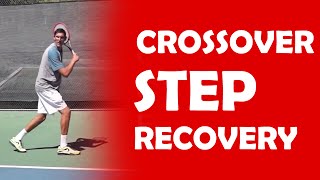
- Stand in ready position. Place a cone about 3–4 metres to your right.
- Hop into a split step — land wide, knees bent.
- The instant you land, push off to the right with your left foot and crossover run to the cone.
- At the cone, plant your outside foot and swing a shadow forehand.
- Shuffle sideways back to start — don't turn and run, shuffle.
- 10 reps to the right (forehand), then move the cone to the left and do 10 backhand side.
💡 This is the single most tennis-specific drill in this plan. The split-step → push → swing is exactly what you do on every point.
- Stand beside the ladder facing sideways, left shoulder toward the far end.
- Step your left foot into the first square, bring your right foot in beside it.
- Step left out the other side, right follows — you've cleared one square.
- Keep shuffling sideways to the end, then come back the other way.
- Hips stay low throughout — don't pop up between squares.
⚠️ Common mistake: crossing your feet. It's a shuffle only — feet never cross in front of each other.
- Stand beside the ladder facing sideways.
- Step your near foot into the first square.
- Cross your far foot in front of your body into the same square.
- Step near foot out the other side, far foot follows normally.
- Keep shoulders facing forward — only your legs do the crossing.
⚠️ Common mistake: rotating your hips with the cross. Shoulders stay square; only the feet move.
3 · Light plyos
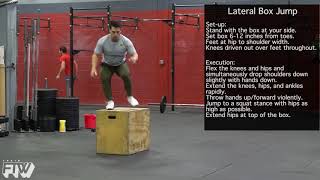
- Stand beside the 20" box on your left side, feet together.
- Bend your knees slightly to load.
- Jump sideways to the right, lead with your right foot, land on top with both feet.
- Land soft with bent knees, then step down the other side.
- Turn around and go back. That's one rep each direction.
⚠️ Common mistake: twisting your upper body in the air. Keep hips and shoulders square the whole time.
- Stand on your right foot, knee slightly bent.
- Push off sideways to the left — like a speed skater pushing off the ice.
- Land on your left foot only, knee bent, and hold for 1 full second without touching the other foot down.
- Then push back to the right. That's 2 jumps (1 each side).
- 3 sets of 10 total jumps. Rest 45 seconds between sets.
⚠️ This is the most tennis-specific exercise in the whole plan. Every time you lunge wide for a ball you're doing this exact movement. Land soft — knees bent, no loud thump.
- Place your right foot flat on top of the 20" box, left foot stays on the floor.
- Push through your right heel and stand up onto the box.
- As you rise, drive your left knee up fast to hip height.
- Hold the top for one second — stay tall, don't lean forward.
- Step back down slowly. Do all reps on the right, then switch to left.
⚠️ Common mistake: leaning forward as you push up. Keep your chest up and back straight.
4 · Finish
- Stand at your imaginary centre baseline position.
- Hop into a split step — land wide, knees bent, weight on the balls of your feet.
- The instant you land, push off hard sideways and sprint 3 steps.
- Plant your outside foot and swing a full shadow forehand or backhand.
- Jog back to centre. Alternate right (forehand) and left (backhand) each rep.
💡 Tip: the sprint should be all-out explosive — imagine the ball was just hit to the corner and you have 1 second to get there.
5 · Quick stretch
- Step your right foot forward into a low lunge. Back knee rests on the floor.
- Keep your chest tall — don't lean forward.
- Push your hips forward slightly until you feel a stretch at the front of your left hip.
- Hold 30 seconds, then switch sides.
💡 Hip muscles tighten during sprint and plyo work. Stretching them keeps your stride long and free.
- Stand facing a wall, hands on it for support.
- Step your right foot back about 60cm, keeping it flat on the floor.
- Lean your hips toward the wall until you feel a stretch in your right calf.
- Hold 30 seconds, then switch legs.
💡 Tight calves are one of the top causes of ankle rolls in young tennis players.
If you're playing — warm up first
- Lift your knees to about hip height with each step.
- Land softly on the balls of your feet — no stomping.
- Keep your arms swinging naturally at your sides.
- Stay relaxed — this is warm-up, not a sprint.
- High knees: drive each knee up to hip height as fast as you can, pumping your arms.
- Butt kicks: kick your heel up behind you to try to touch your butt, alternating legs fast.
- Stay on the balls of your feet for both.
- These wake up your hip muscles and quads — key for running wide balls.
- Stand beside a wall and hold it lightly with one hand.
- Forward/back: swing your outside leg forward and back like a pendulum, 10 times.
- Side to side: swing the same leg across your body and out to the side, 10 times.
- Switch sides. Keep the swing relaxed — momentum, not muscle.
💡 Tip: these open up your hips and hamstrings — critical for wide lunges in tennis.
- Arms out to the sides, make big circles forward for 10 reps.
- Reverse — big circles backward for 10 reps.
- Then roll your shoulders forward 10 times, then backward 10 times.
- These warm up your shoulder muscles — important before any swinging.
- Inchworm: stand tall → bend and put hands on floor → walk hands out to a plank → walk feet back to hands → stand up. That's one.
- Lunge with rotation: step forward with right foot into a lunge → twist your upper body to the right, arms out → twist back → return to standing.
- 5 inchworms, then 5 lunges each side.
- These are probably the best warm-up exercises for tennis — they open hips, hamstrings, and upper back all at once.
⚠️ Common mistake on the lunge: leaning forward. Keep your torso upright as you twist.
Wake up your hands (fun)
- Stand in ready position, ball in your right hand.
- Drop the ball in front and slightly to your right (forehand side).
- Watch it hit the floor and bounce up — track it all the way.
- As it rises to waist height, swing a full shadow forehand through it (don't actually hit it).
- 10 forehands (ball drops to the right), then 10 backhands (ball drops to the left).
💡 Tip: time your swing so your hand passes through the ball at waist height — exactly like a real shot.
- Hold one ball in each hand, arms at your sides.
- Toss your RIGHT ball up about 40cm.
- Half a second later, toss your LEFT ball up.
- Catch right, then catch left. Keep going without stopping.
- Count consecutive catches without dropping. Target: 10 in a row.
⚠️ Common mistake: tossing both balls at the same time. Right goes FIRST — left follows half a second later.
Prime the swing
- Start in ready position — feet shoulder-width apart, knees slightly bent.
- Rotate your shoulders to the right (unit turn) — this is your backswing.
- Drive forward fast — swing through the hitting zone and finish hands high over your left shoulder.
- Snap back to ready position immediately after each swing.
- All 20 reps with full effort — fast and powerful, no breaks.
⚠️ Common mistake: only swinging your arm. Power comes from rotating your whole upper body, not just the arm.
- Ready position — both hands on your imaginary grip.
- Rotate your shoulders to the LEFT — right shoulder points toward the net.
- Drive both hands forward and through the hitting zone.
- Finish high — both hands end up over your right shoulder.
- Reset to ready position immediately and repeat.
⚠️ Common mistake: only using one hand. Both hands should drive the swing together on a two-handed backhand.
Optional easy stretch
- Stand facing a wall, hands on it for support.
- Step your right foot back about 60cm, keeping it flat on the floor.
- Lean your hips toward the wall until you feel a stretch in your right calf.
- Hold 30 seconds, then switch legs.
💡 Tight calves are one of the top causes of ankle rolls in young tennis players.
- Step your right foot forward into a low lunge. Back knee rests on the floor.
- Keep your chest tall — don't lean forward.
- Push your hips forward slightly until you feel a stretch at the front of your left hip.
- Hold 30 seconds, then switch sides.
💡 Hip muscles tighten during sprint and plyo work. Stretching them keeps your stride long and free.
- Sit on the floor. Extend your right leg straight, bend your left knee with foot tucked in.
- Sit up tall, then hinge forward from your hips (not your lower back) toward your right foot.
- Reach as far as comfortable. Hold 30 seconds.
- Switch legs.
⚠️ Don't round your back to reach further — hinge from your hips. You'll feel it more in the right place.
- Lie on your back, knees bent, feet flat.
- Cross your right ankle over your left knee (making a figure-4 shape).
- Pull your left thigh toward your chest — you'll feel a stretch in your right glute.
- Hold 30 seconds, switch sides.
💡 Strong, flexible glutes help you push off in any direction without back pain.
- Sit cross-legged on the floor, back straight.
- Place your right hand on your left knee and your left hand on the floor behind you.
- Rotate your upper body to the left and look behind you. Hold 2 seconds.
- Come back to centre, switch sides.
- 10 rotations per side.
💡 This is the exact rotation your upper back makes on every serve and forehand. Keeping it mobile means more power and less shoulder strain.
- One thing I did well today (effort or attitude — not the score).
- Did I use my reset routine? Yes / No.
- One thing to work on next time.
- Print the journal page (link at the bottom of this tab) and keep it in his kit bag.
💡 The habit is the point. Two honest minutes he'll keep up beats a long entry he won't.
- After every point in practice sets, do the 4-step reset before the next one.
- At the wall or ball machine, reset between feeds so it becomes automatic.
- By match day it should feel normal — not something he has to remember.
- Choose one clip — start with box breathing.
- Try it at his next practice.
- Next week, pick another. Little and often.
- The instant the point ends, turn away from where the mistake happened.
- Pull your shoulders back and walk tall — confident body language, on purpose.
- This ‘discharges’ the frustration so it doesn't carry to the next point.
- Take one deliberate breath: in through the nose, slow out through the mouth.
- Make the exhale longer than the inhale — that's what lowers the heart rate.
- Feel your shoulders relax on the way out.
💡 See the box-breathing video below to practise the breath at home.
- Drop your eyes to your strings and adjust them with your non-hitting hand.
- It gives your mind a small, calm job instead of replaying the mistake.
- Almost every pro does this — watch for it next time you see a match.
- Pick a short cue he controls: “move first,” “big target,” “high over the net.”
- Do the same serve/return ritual every time — e.g. bounce the ball 3 times.
- Then play the point. Same 4 steps, every single point.